PE coated aluminum foil combines the reflective performance of aluminum foil with the moisture-resistant protection of polyethylene. It is widely used in roof insulation, building membranes, HVAC duct wrap, and laminated packaging materials. This article explains how PE coated aluminum foil is manufactured, from foil selection and PE resin preparation to extrusion coating, bonding, rewinding, and quality inspection.
PE coated aluminum foil is widely used in reflective insulation, roof sarking, HVAC duct wrap, vapor barriers, packaging laminates, and other applications where moisture resistance, durability, and heat reflection are important. Although the finished material may look simple—a shiny aluminum surface bonded with a polyethylene layer—the manufacturing process requires careful control of foil quality, resin selection, coating temperature, bonding strength, and final inspection.
A well-made PE coated aluminum foil should not only have a clean metallic appearance. It also needs stable adhesion, uniform coating thickness, resistance to pinholes, and reliable performance during converting, transport, and installation.
1. Selecting the Aluminum Foil
The process starts with aluminum foil, usually supplied in jumbo rolls. Depending on the end use, manufacturers may choose different foil thicknesses, tempers, surface finishes, and alloy grades.
For insulation and building membrane products, aluminum foil is often used because it provides excellent radiant heat reflectivity and acts as a barrier against moisture and vapor. In packaging or industrial laminates, the foil may be selected more for its barrier properties, printability, dead-fold performance, or compatibility with other layers.
Before coating, the foil surface must be clean and stable. Dust, oil residue, wrinkles, oxidation, or surface contamination can reduce bonding performance. For this reason, the incoming foil is normally checked for thickness consistency, tensile strength, surface condition, roll edge quality, and visible defects.
2. Preparing the PE Resin
The PE layer is usually made from polyethylene resin, such as LDPE, LLDPE, HDPE, or a customized blend. The exact formula depends on the target application.
LDPE is commonly used when flexibility and easy processing are important. LLDPE can improve puncture resistance and tensile strength. In some applications, manufacturers add additives to improve UV resistance, tear resistance, color stability, flame-retardant performance, or processing behavior.
For example, PE coated aluminum foil used in roof insulation may require a tougher polyethylene layer to withstand handling during installation. A product intended for packaging may need a smoother coating surface, better sealing performance, or compliance with specific food-contact requirements.
The resin is fed into an extrusion system and melted at controlled temperatures. Stable melt flow is essential. If the resin temperature is too low, the coating may not bond properly. If it is too high, the material may degrade, discolor, or create an uneven surface.
3. Extrusion Coating or Laminating
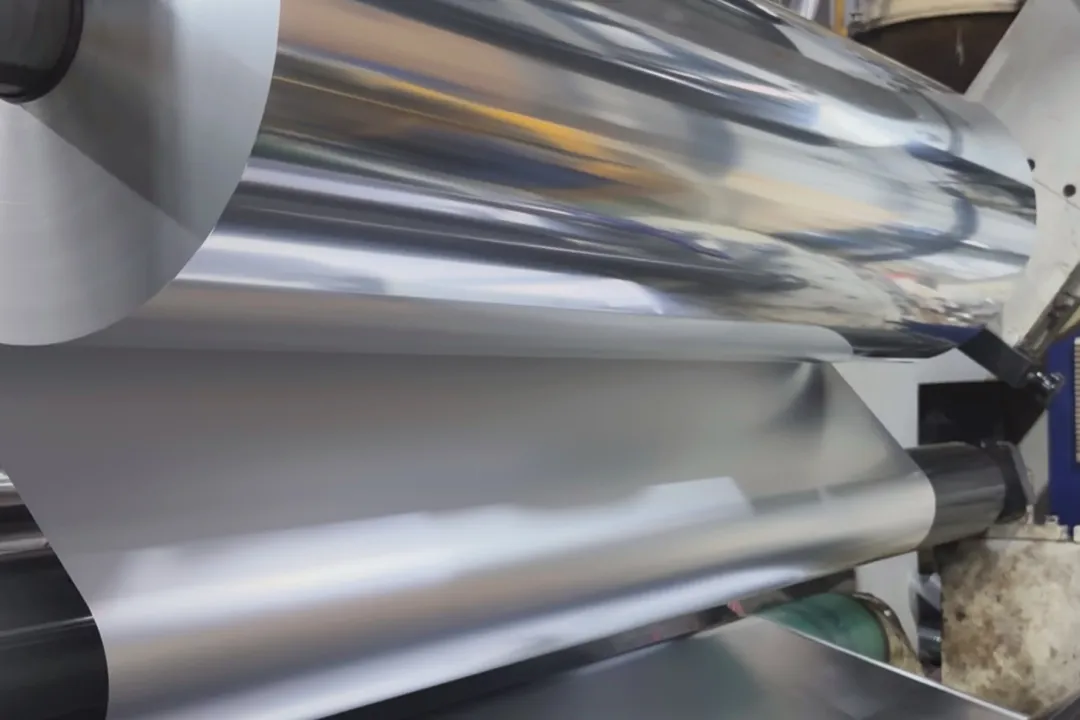
The most common manufacturing method is extrusion coating. In this process, melted polyethylene is extruded through a flat die to form a thin molten film. The hot PE film is then applied directly onto the moving aluminum foil web.
As the foil passes through the coating line, it travels at a carefully controlled speed. The molten PE is deposited evenly across the foil surface, and pressure rollers press the layers together. The material then passes through cooling rollers, which solidify the polyethylene and help create a smooth, uniform finished surface.
The key control points during extrusion coating include:
- Coating weight or PE thickness
Even a small variation in these settings can affect final quality. If the coating is too thin, the material may have poor moisture resistance or reduced mechanical protection. If it is too thick, the product may become unnecessarily heavy and expensive. Uneven coating can also lead to weak spots, curling, poor appearance, or inconsistent lamination performance.
In some cases, PE coated aluminum foil is produced through lamination rather than direct extrusion coating. For example, the aluminum foil may be laminated with a pre-made PE film using adhesive, heat, or additional bonding layers. This method can be used when the final product requires more complex structures, such as aluminum foil/PE film/woven fabric, aluminum foil/foam, or aluminum foil/bubble insulation.
4. Improving Adhesion Between Foil and PE
Strong adhesion is one of the most important quality requirements for PE coated aluminum foil. If the PE layer separates from the foil during converting or use, the product can lose its protective and functional value.
To improve bonding, manufacturers may use surface treatment methods such as corona treatment, flame treatment, chemical priming, or specialized extrusion coating resins. These treatments increase the surface energy of the aluminum foil or PE layer, allowing the materials to bond more effectively.
Adhesion strength is especially important for construction and insulation materials. Roof sarking, reflective insulation, and duct insulation products may be exposed to temperature changes, humidity, folding, tension, and handling on-site. Poor bonding can cause delamination, edge lifting, or reduced long-term reliability.
5. Cooling, Trimming, and Rewinding
After coating, the material is cooled and stabilized before being trimmed and rewound. Edge trimming removes irregular sides and ensures the finished rolls meet the required width tolerance.
The coated aluminum foil is then wound into finished rolls or jumbo rolls according to customer requirements. During rewinding, the manufacturer needs to maintain proper tension. Excessive winding tension may create wrinkles, telescoping, or deformation. Insufficient tension may result in loose rolls that are difficult to process later.
For export orders, roll diameter, core size, roll length, packaging method, and pallet loading are normally customized. A reliable supplier should confirm these details before production, especially for customers using automatic laminating, slitting, or converting machines.
6. Quality Inspection Before Shipment
Before shipment, PE coated aluminum foil should go through several inspections. Typical tests include:
- Aluminum foil thickness and PE coating thickness
- Surface smoothness and appearance
- Peel strength or bond strength
- Pinhole and light transmission inspection
- Tensile strength and elongation
- Heat resistance or temperature stability
- Moisture barrier performance
- Roll edge condition and winding quality
Visual inspection is also important. The finished product should be free from wrinkles, bubbles, scratches, coating streaks, oil stains, holes, and obvious color variation. For reflective insulation applications, the aluminum surface should maintain good reflectivity and a clean appearance.
Choosing the Right PE Coated Aluminum Foil
PE coated aluminum foil is not a one-size-fits-all material. The right structure depends on how the product will be used. Buyers should clearly communicate the expected application, required thickness, PE coating weight, roll size, bonding requirement, and any special performance needs.
For instance, a lightweight foil with a thin PE layer may be suitable for certain packaging or laminating uses. A heavier-duty structure with thicker PE coating or reinforced backing may be better for roof insulation, wall insulation, underfloor systems, and industrial protective barriers.
Manufacturing quality makes a direct difference to the final product’s performance. From raw aluminum foil selection to extrusion coating, bonding, rewinding, and inspection, every step affects durability, appearance, and usability. When produced correctly, PE coated aluminum foil offers a practical combination of reflective performance, moisture protection, flexibility, and processing efficiency.

