
You can often find silver-colored rolls of insulation in construction projects, cold-chain facilities, or industrial buildings. Although many people simply call them "aluminum foil film," most products are actually multi-layer composite materials rather than a single sheet of aluminum foil.
Aluminum foil composite film is a laminated material made by bonding aluminum foil with PET film, PE film, woven fabric, EPE foam, XPE foam, kraft paper, or other functional materials.
Different layer combinations are designed for different applications. Products may look similar on the surface, but their performance can vary considerably.
Pure aluminum foil offers excellent radiant heat reflection while providing an effective barrier against moisture, oxygen, and light.
However, aluminum foil is thin and can crease or tear easily. Used alone, it has limited mechanical strength.
By laminating aluminum foil with other materials, manufacturers improve durability and handling while maintaining its reflective properties.
There is no single standard construction. Common laminate structures include:
Each layer contributes different functions, including heat reflection, moisture resistance, reinforcement, cushioning, or thermal insulation.
Many people think aluminum foil itself provides insulation. In reality, its primary function is to reflect radiant heat.
Reducing overall heat transfer usually requires additional insulating layers such as foam or trapped air spaces.
For this reason, many building systems use Radiant Barrier Insulation Rolls rather than aluminum foil alone.
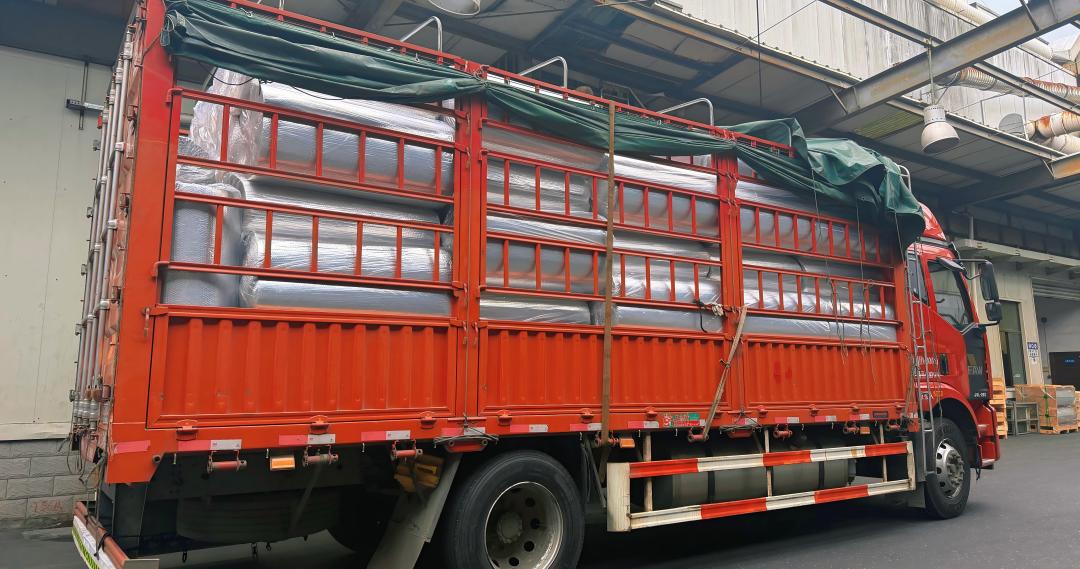
Used for roofs, walls, steel buildings, and attic insulation.
Applied in HVAC duct insulation, air-conditioning systems, and equipment insulation.
Provides moisture and oxygen protection for machinery, electronics, and sensitive components.
Combined with foam insulation to reduce temperature fluctuations during transportation.
The application is usually more important than the foil thickness when selecting an aluminum foil composite film.
Typical considerations include:
These factors determine whether woven fabric, foam, or other functional layers should be incorporated.
Aluminum foil composite film is not a single material but a family of multi-layer laminates. Aluminum foil provides radiant heat reflection and barrier performance, while additional layers improve strength, durability, and thermal efficiency.
For applications such as building insulation, industrial packaging, and HVAC systems, selecting the appropriate laminate structure is more important than focusing solely on foil thickness. Products including Aluminum Foil Woven Fabric, Reflective Insulation Aluminum Foil Fabric, and Radiant Barrier Insulation Roll are all examples of composite designs developed for different performance requirements. The right choice depends on the working environment and application needs rather than appearance alone.
