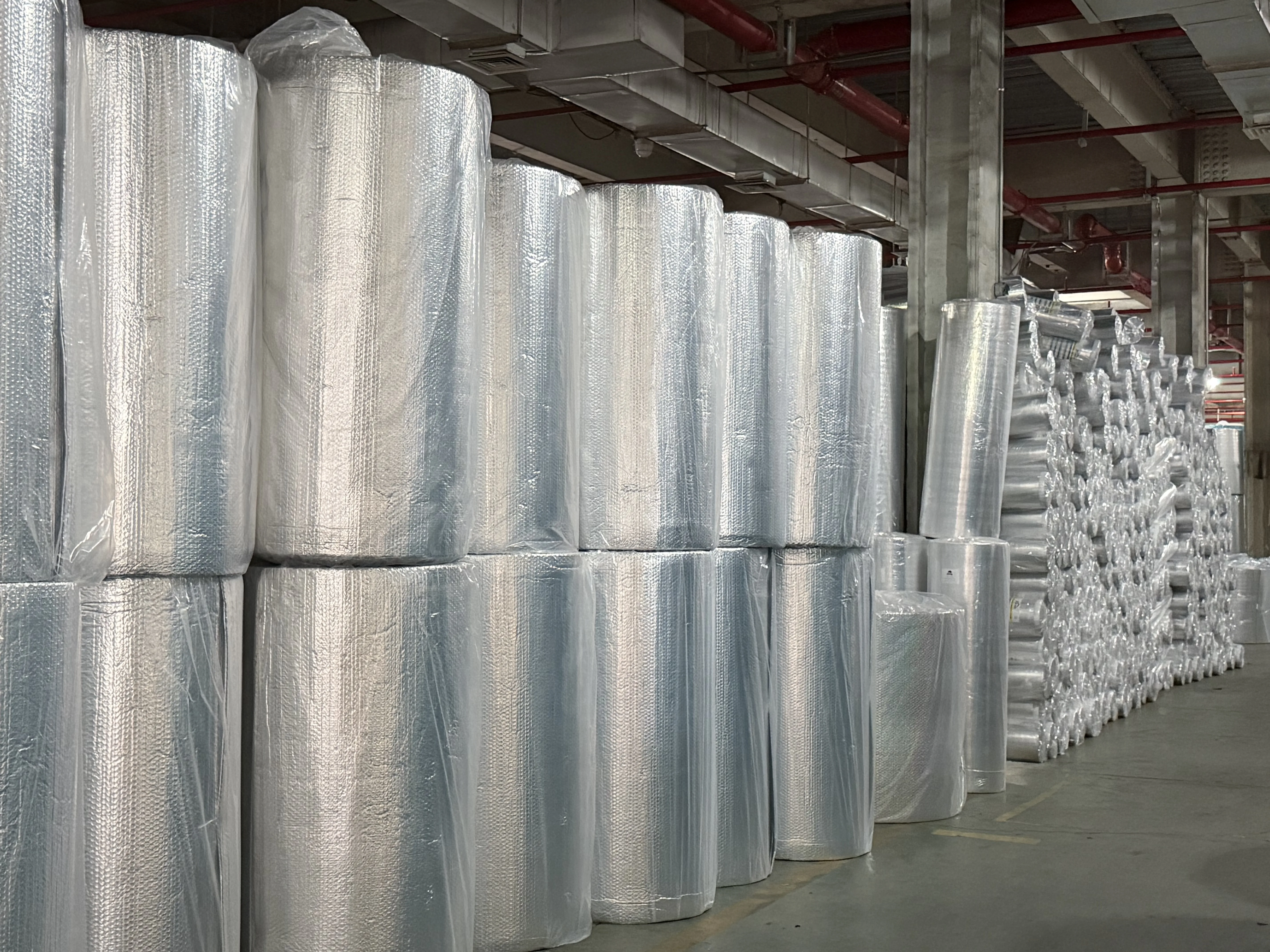
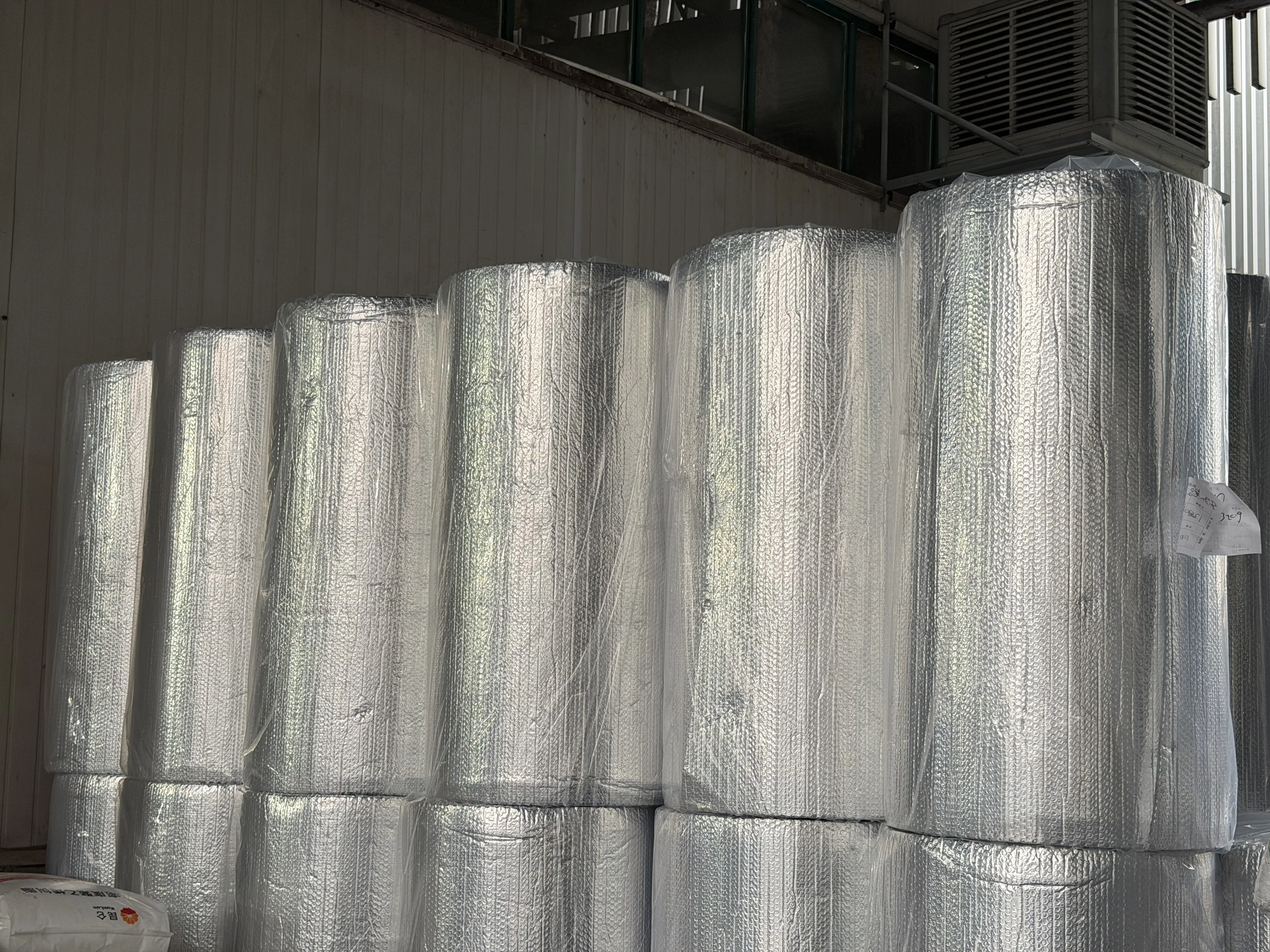
One air-bubble layer laminated between two aluminum foil facers. The lightest, most
flexible option for radiant-barrier upgrades where space and weight are limited.
Two sealed bubble layers for a thicker air gap and higher thermal resistance —
the standard choice for roofs, metal buildings and HVAC where R-value matters most.
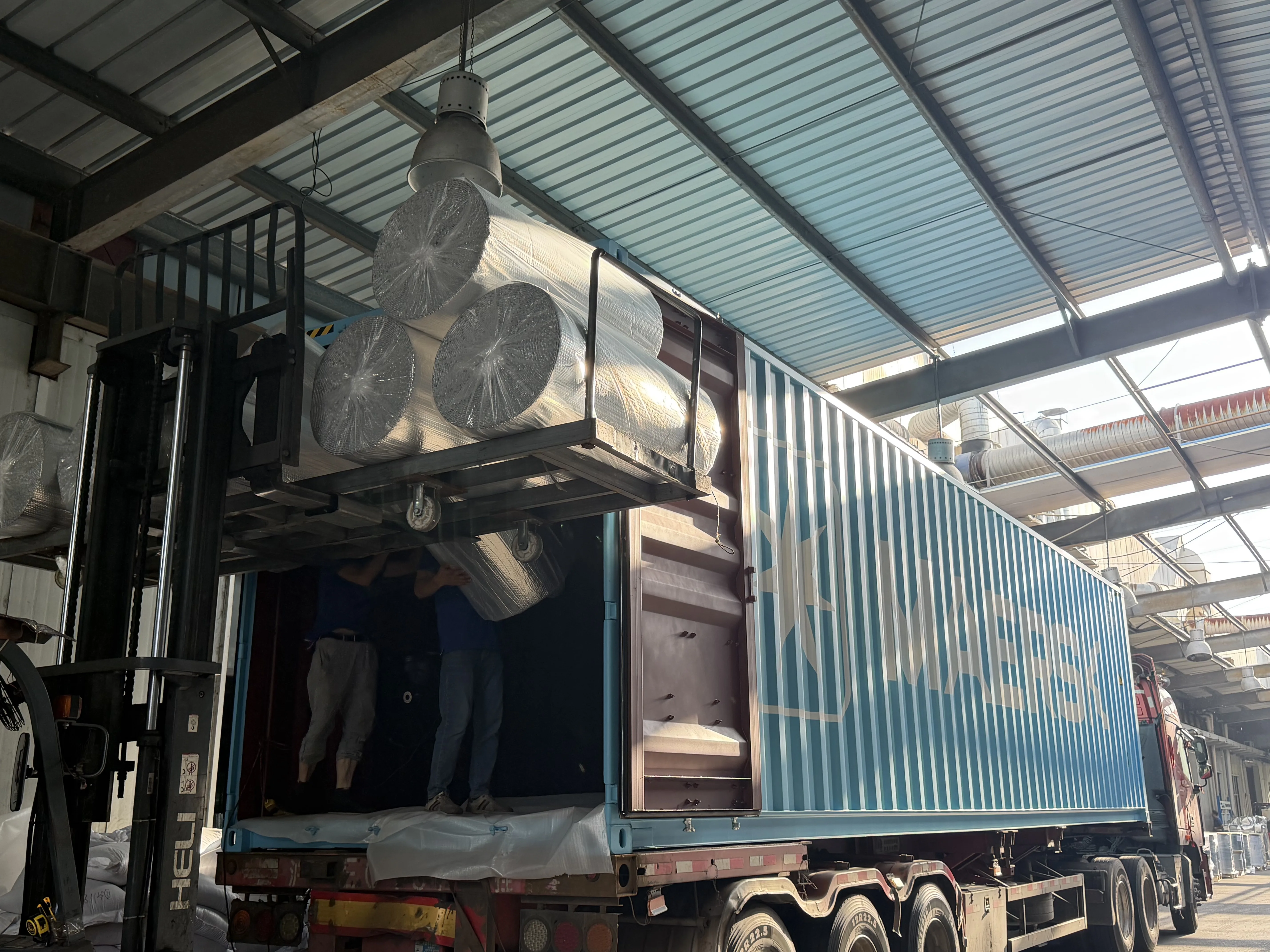
Dedicated bubble foil insulation production with in-house lamination —
from aluminum foil coating and bubble bonding to slitting — handled under one roof for
tight process control.
Factory Capacity
Factory-direct supply with stable monthly output and short lead times,
so distributors and contractors get consistent stock without trading-company markups.
Sustainability Mission
Hangzhou Green & Low-Carbon Factory certified.
ISO 9001 & ISO 14001 accredited.
Developing sustainable composites for global carbon reduction.
Global Export
Export experience to 80+ countries, supporting contractors,
distributors and metal-building suppliers with documentation and compliant specs.
OEM Service
Customize bubble size (10×2.5 mm to 20×8 mm), thickness, roll width and
surface printing to your spec — built for private-label and project programs.
R&D / Custom Engineering
Our engineering team develops application-specific structures —
adjusting layers and bubble configuration to your project — and supports sampling
and performance validation before bulk production.
Ready to specify your bubble foil insulation?
Send your specs and quantities — we reply with a factory quote.
What is bubble foil insulation and how does it work?
It is a multi-layer reflective insulation built from aluminum foil + polyethylene bubble (and, on reinforced grades, an EPE foam layer). The foil faces reflect up to 95–97% of radiant heat, while the trapped air in the bubbles adds a thermal break and a vapor barrier. It performs mainly by reflecting radiant energy rather than absorbing it.
How is it different from traditional bulk insulation (R-value)?
Radiant barriers are rated by reflectivity and emissivity, not by R-value alone. The thin core has a low nominal R-value, but in a real wall or roof the benefit comes from blocking radiant heat gain plus the air gap the foil faces. For the US market, FTC 16 CFR Part 460 requires radiant-barrier claims to avoid unqualified R-value statements — we can supply tested performance data on request.
What reflectivity and temperature range can I expect?
The aluminum faces reflect 95–97% of radiant heat, and the low-emissivity surface minimizes re-radiation. Typical service temperature is around −40 °C to 80 °C, suitable for roofing, ducts, warehouses and container liners.
What structures, bubble sizes and roll sizes are available?
Three main builds: Single, Double and Reinforced (Foam) bubble. Bubble sizes include 10×2.5 / 10×4 / 10×5 / 20×6 / 20×7 / 20×8 mm. Standard roll width is 1.2 m, length 30 m or 40 m per roll, with customized length available.
Do you provide OEM, private label and customization?
Yes. We support structure, bubble size, thickness, width, printing and private-label customization, and we export to 100+ countries, supplying contractors, distributors and metal-building manufacturers with documentation and compliant specifications.
What is the MOQ and lead time?
MOQ depends on the structure and width, and we handle both trial/sample orders and full container volumes. Lead time is confirmed per specification — standard rolls ship faster, while custom structures are quoted case by case. Tell us your spec and we will confirm both.
Can you share test data and certifications?
We run in-process QC on every roll — incoming foil/resin checks, line-side spot tests for thickness, weight and reflectivity, and reel-by-reel visual review. Product test data and documentation are available on request; just ask and our team will share what applies to your target market.
How is it installed?
Keep a reflective air gap facing the heat source for best performance. Staple or tape it to framing, lay it over joists in attics, or wrap it around ducts and seal the seams. The foil surface should face the open air space, not be buried directly against a solid mass.
Still have a question about your project? Talk to our team.