Aluminum-faced XPE foam and XPS provide thermal insulation in different ways. Understanding their materials, installation requirements, and performance data can help you choose the right option for your application.
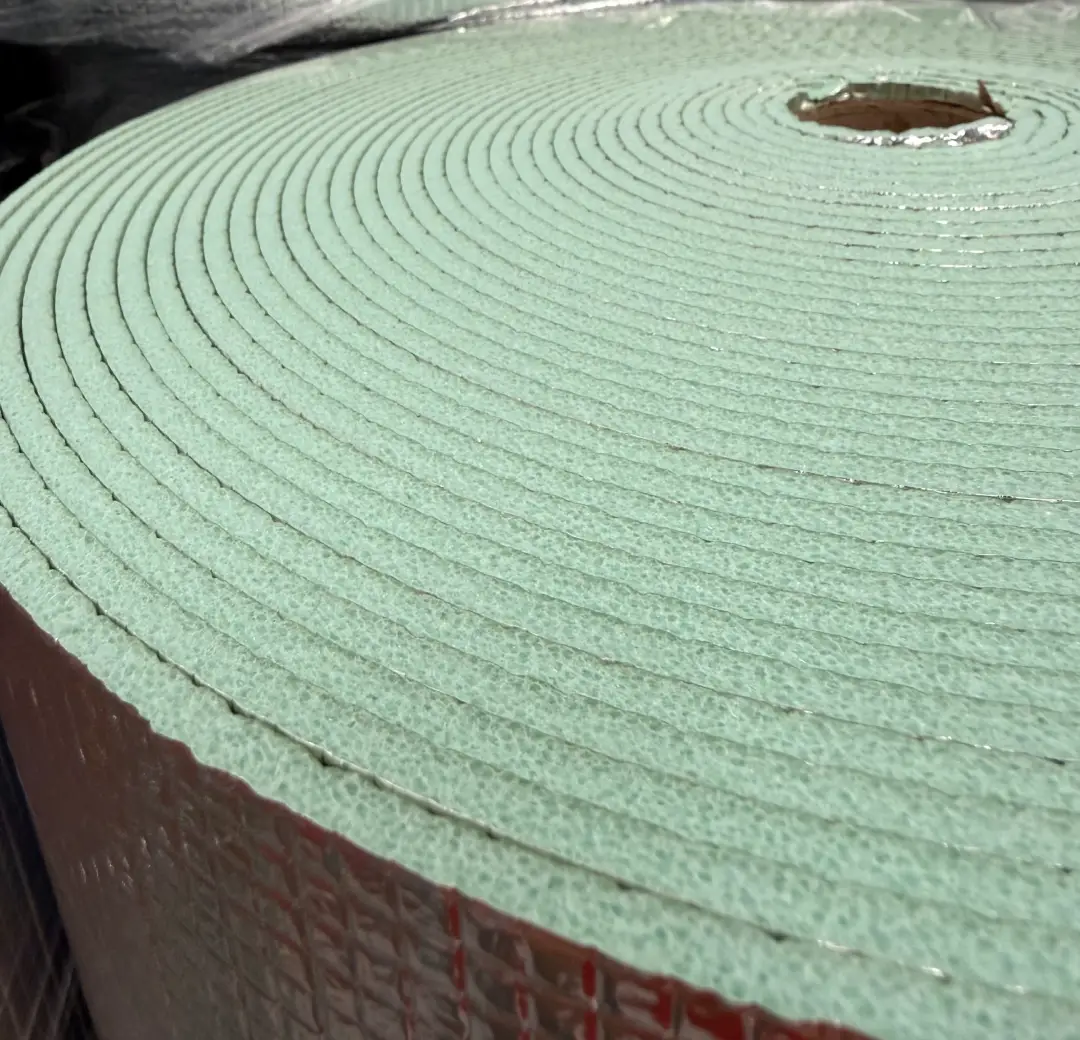
The main differences between aluminum-faced XPE foam and XPS lie in their base materials, product structures, and insulation mechanisms. Aluminum-faced XPE consists of cross-linked polyethylene foam laminated with aluminum foil, combining the foam’s insulating properties with the effects of a reflective surface. XPS is a rigid extruded polystyrene foam board that primarily relies on its closed-cell structure to provide thermal insulation. Neither material should be judged by thickness alone; installation conditions and the tested performance of the specific product also need to be considered.
How Do Aluminum-Faced XPE Foam and XPS Difference?
| Comparison |
Aluminum-Faced XPE Foam |
XPS Insulation Board |
| Material composition |
Cross-linked polyethylene foam laminated with a reflective aluminum foil layer |
Extruded polystyrene closed-cell foam |
| Insulation mechanism |
Foam insulation combined with an aluminum foil surface that reduces radiant heat transfer |
Primarily relies on the thermal resistance of the foam board itself |
| Key selection criteria |
Base-material properties, condition of the reflective surface, and whether an air space is provided |
Thickness, thermal resistance, compressive strength, and water absorption |
| Important comparison considerations |
System performance that includes an air space must not be treated as the performance of the foam alone |
Data for one product model must not be used as a substitute for data for another |
These distinctions are based on information about cross-linked polyethylene materials, technical guidance on reflective insulation, and XPS product documentation. Actual purchasing decisions should still be based on test reports for the specific product model.
Why Does Aluminum-Faced XPE Foam Need an Air Space?
The reflective insulating performance of aluminum foil depends not only on the condition of its surface but also on how it is installed.
According to the U.S. Department of Energy, a reflective insulation layer must face an air space to work effectively. If the foil is sandwiched tightly between two materials, performance figures obtained under conditions that include an air space cannot be applied directly. Therefore, when considering aluminum-faced XPE for a roof or a layered assembly, first confirm the orientation of the reflective surface and the provision of an air space before assessing its suitability.
This also explains why “high foil reflectivity” does not necessarily mean “better thermal performance for the entire assembly.” Reflective surface properties and the thermal resistance of an assembly are two different measures.
How Should You Interpret XPS Thermal and Compressive Performance Data?
When assessing whether XPS is suitable for a project, focus on the test conditions rather than simply looking for higher or lower numbers. Thermal performance must be evaluated in terms of thermal conductivity, thickness, and thermal resistance. Compressive performance requires a distinction between laboratory test results and actual service loads.
Thermal Performance: Compare Under Consistent Conditions
Thermal conductivity describes a material’s ability to conduct heat. Under the same test conditions, a lower value generally indicates better insulating performance. Thermal resistance depends on both thermal conductivity and thickness, so the inherent performance of XPS boards of different thicknesses cannot be judged solely by comparing their thermal resistance values.
When reviewing test reports, check the test standard, mean test temperature, and sample thickness. Data are meaningfully comparable only when the comparison conditions are consistent. Results for a particular product model should not be treated as universal values for all XPS products.
Compressive Performance: Do Not Treat It as Long-Term Load-Bearing Capacity
Compressive strength indicates a material’s resistance to compression under specified test conditions. When selecting a product, check not only the reported value but also the test standard and the deformation level or assessment criteria associated with that value.
In particular, short-term compressive test results are not equivalent to the allowable long-term load in an actual application. For floors and other areas subject to sustained compression, suitability must be assessed against the design loads and the product’s application requirements—not determined from a single compressive strength value alone.
Which Material Provides Better Thermal Insulation?
Neither aluminum-faced XPE nor XPS can be declared the better insulator without considering thickness, test conditions, and installation details.
The first step is to distinguish between material thermal resistance and the thermal resistance of a complete system that includes an air space. If one document reports the performance of the foam board alone while another reports the combined performance of a reflective layer, foam, and an air space, the figures are not directly comparable.
For applications requiring rigid boards, continuous insulation, and resistance to compression, focus on the relevant XPS performance indicators. For assemblies intended to use a reflective layer to reduce radiant heat transfer, focus on the available installation space and the conditions of the reflective surface when assessing aluminum-faced XPE.
What Documentation Should You Check Before Purchasing?
Ask the supplier for complete technical documentation for the specific product model. At a minimum, verify the thickness, thermal conductivity or thermal resistance, test temperature, test standard, and whether the reported performance includes an air space. For applications involving compressive loads or moisture exposure, also check compressive strength and water absorption.
Reliable material selection should not be based on vague claims such as “superior insulation.” What matters is whether the product data correspond to the actual assembly. Establish consistent comparison conditions before evaluating performance to avoid purchasing a material that looks impressive on paper but fails to meet expectations once installed.

