Choosing the right aluminum foil woven fabric manufacturer takes more than comparing prices. Before requesting a quote, understand the material structure, check product samples, verify production quality, and confirm delivery requirements to make a confident purchasing decision.
Finding an
aluminum foil woven fabric manufacturer and getting a quote is usually straightforward. The real challenge is determining whether different quotations are actually comparable. Two products may both be described as “double-sided aluminum foil woven fabric,” yet differ in material structure, grammage, lamination requirements, and finished roll specifications. Comparing only the price per square meter can easily lead to the wrong conclusion.
When choosing a manufacturer, I focus on three things: whether the supplier can clearly explain the product, whether the sample meets the agreed specifications, and whether the same quality can be maintained throughout production and delivery.
Start with the Application, Not the Lowest Price
Instead of simply asking, “How much is aluminum foil woven fabric per square meter?”, explain how the material will be used. Is it intended for industrial roofing, a building vapor barrier, or equipment packaging? Do you need custom printing, perforation, or a particular roll width?
Aluminum foil woven fabric is available in different constructions, including single-sided and double-sided laminates. Some configurations also incorporate materials such as kraft paper. Depending on the product, technical specifications may include grammage, machine-direction and cross-direction tensile strength, water vapor transmission rate, and emissivity.
In other words, products with the same name do not necessarily offer the same performance.
A reliable manufacturer should ask about your application and help identify suitable material structures and performance requirements. Be cautious of suppliers who recommend their cheapest option before understanding how you intend to use the product.
Ask for the Complete Material Structure
A clearly defined material structure is far more useful than a general promise of high-quality materials.
Ask the manufacturer to specify each layer. Does the surface use aluminum foil or metallized film? What material is used for the woven substrate? Is the product single-sided or double-sided? What are the thicknesses of the individual layers and the grammage of the finished material?
These details should be included in a technical specification sheet rather than left only in email exchanges or chat records.
The market includes both aluminum foil laminated woven fabrics and products made with metallized film. Although they may look similar because of their reflective surfaces, their material compositions are not necessarily the same.
Your quotation should also be based on an agreed set of specifications. Otherwise, one supplier might quote a standard roll, while another includes custom printing, slitting, and reinforced packaging. Comparing their unit prices alone will not tell you which offer represents better value.
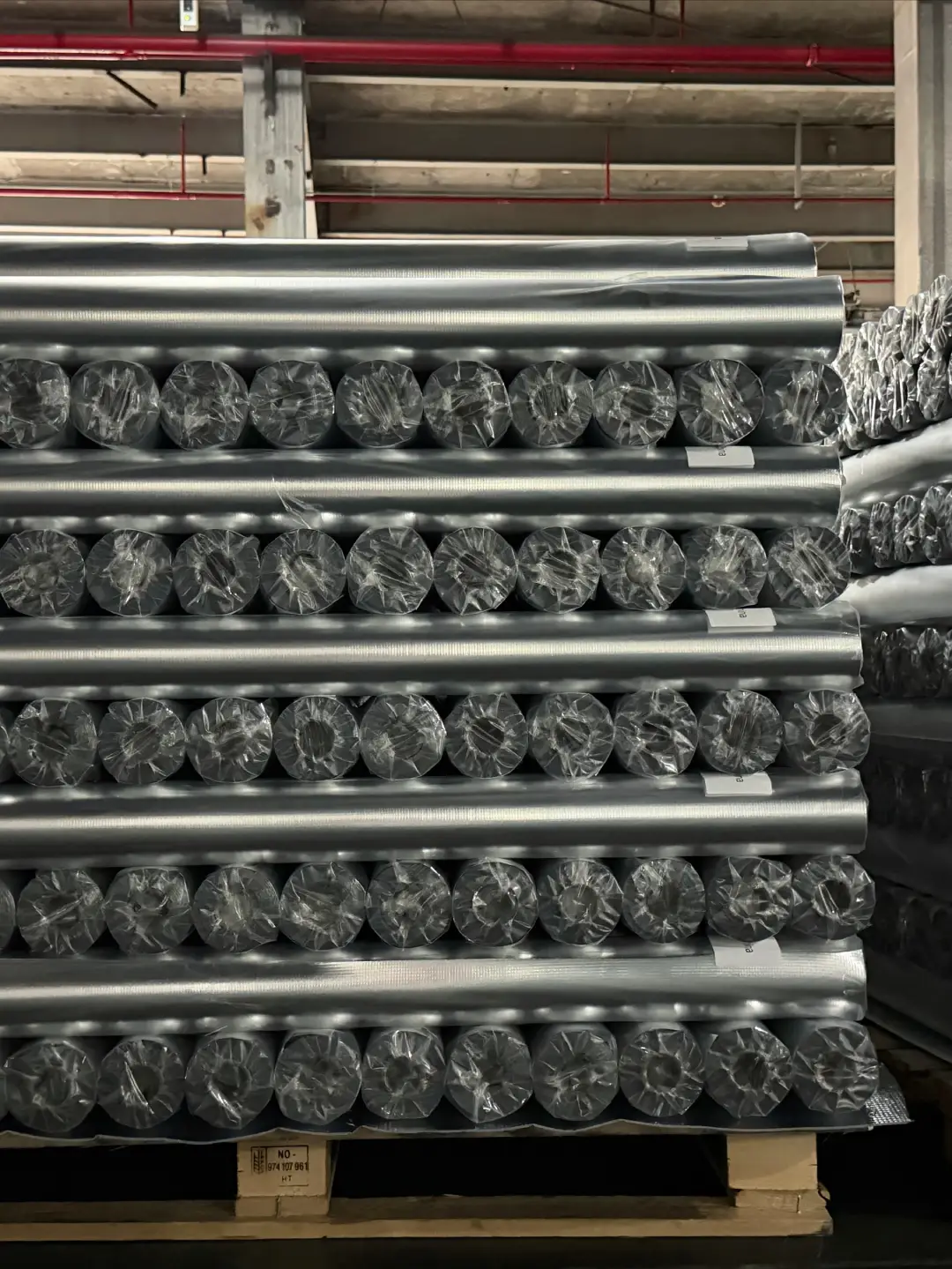
Don't Judge a Sample by Its Shine
When a sample arrives, start by checking for visible damage, wrinkles, and uneven lamination. Examine the cut edges as well to see whether the layers separate easily.
Appearance and feel are useful for an initial assessment, but they cannot replace proper testing.
When requesting technical data, ask the manufacturer to identify the test method, measurement units, and testing direction. For example, some product specifications list tensile strength separately in the machine and cross directions, along with emissivity and the corresponding test method. These details are essential when comparing results from different suppliers.
For reference, some manufacturers publish product-specific technical data, including tensile strength and emissivity values. Such information can help establish a basis for comparison, provided the test conditions and material specifications are comparable.
If your project requires flame-retardant performance, temperature resistance, or other specific properties, request test reports for the exact product you intend to purchase. Check that the report identifies the relevant material structure, sample, and testing scope. A certificate cover page alone is not enough to establish that a product meets your requirements.
Look Beyond Showroom Photos: Understand Production Control
To verify a manufacturer's capabilities, ask about its lamination, slitting, and packaging processes. Find out which operations are carried out in-house and which are outsourced.
Outsourcing does not automatically make a supplier unsuitable. What matters is whether responsibilities are clearly defined.
Who approves the raw materials? Who inspects the finished product? Who takes responsibility if there are differences between production batches?
One practical question is worth asking: “How do you trace a production batch if the next shipment does not match the approved sample?”
A manufacturer should be able to explain its batch identification, sample retention, and inspection record procedures. These details provide a more useful basis for evaluating production control than general claims about factory size or manufacturing experience.
Put Delivery Requirements in the Purchase Order
Consistency is what matters most in repeat orders. The bulk shipment should match the specifications and sample you have approved.
Before placing an order, document the material structure, acceptable grammage tolerances, roll width, roll length, splice requirements, packaging method, and inspection criteria. Also confirm the minimum order quantity, sampling lead time, mass production lead time, and procedures for handling quality issues.
For a first-time supplier, there is no need to rush into a large order just to secure a lower unit price. A trial order allows you to check product quality, specification consistency, and delivery performance before committing to larger volumes.
Choosing an aluminum foil woven fabric manufacturer is not about finding the supplier who makes the biggest promises. It is about finding one who is willing to put the details into the technical specifications, approved samples, and purchase order.
Price will always matter, particularly for bulk purchases. But before comparing quotations, make sure every supplier is quoting the same material structure and specifications. Only then can you make a meaningful comparison and choose a manufacturer that offers the right balance of quality, cost, and delivery reliability.

