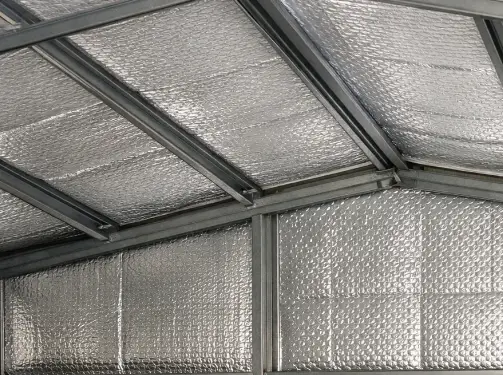
Foil bubble insulation or glass wool—which is right for your roof or warehouse? Compare how they work, their pros and cons, and key selection factors to find the right insulation for your project.
Foil bubble insulation and glass wool are commonly used to insulate factories, warehouses, and metal roofs. One is thin and lightweight; the other is thick and fluffy. However, choosing between them requires more than comparing thickness and price. They work in different ways and are suited to different needs.
How They Work: Reflecting Radiant Heat vs. Slowing Heat Transfer
Foil bubble insulation typically consists of a reflective aluminum foil surface laminated to a bubble layer. The reflective surface primarily reduces radiant heat transfer, while the bubble layer provides some thermal resistance. Glass wool, by contrast, uses air trapped between its fibers to slow heat transfer and is commonly installed as insulation within roof and wall assemblies.
An important distinction is that high reflectivity does not automatically translate into better thermal performance for the entire building. A reflective foil surface must face an air space to perform its intended function. If it is tightly sandwiched between two materials, its reflective insulation benefit will be limited.
Foil Bubble Insulation: Lightweight and Easy to Install, but Reflectivity Is Not the Whole Story
Foil bubble insulation is lightweight, easy to cut, and requires relatively little installation space. It is suitable for applications where an additional reflective insulation layer is needed. However, its limited thickness means that high reflectivity alone is not enough to establish it as a replacement for thicker insulation.
When purchasing, pay particular attention to the conditions under which thermal resistance was tested. Some reported values apply to an assembly that includes both the material and an air space, rather than to the material alone. Before comparing products, check whether the proposed installation matches the test conditions.
Glass Wool: Suitable for Continuous Insulation, but Installation Details Matter
Glass wool is suitable for roofs and walls that require a specified insulation thickness. However, its performance depends heavily on installation quality. Maintain the designed thickness, avoid excessive compression, and minimize gaps at joints and edges. Otherwise, the overall insulation performance may be reduced.
Protective measures during installation are also important. Direct skin contact with glass fibers may cause irritation, so workers should wear long-sleeved clothing and gloves when handling and cutting the material. Glass wool itself is non-combustible, but faced products still require verification of the finished product’s fire performance—not just that of the core material.
How to Choose: Define Your Requirements Before Comparing Prices
The key is to establish whether the project primarily needs to reduce summer radiant heat gain or meet year-round thermal insulation requirements.
If the main goal is to reduce radiant heat transfer from the roof and installation space is limited, foil bubble insulation may be an option. If the project must meet a specified thermal performance target, glass wool thickness and thermal resistance should be calculated according to the design requirements. The two materials can also be used together, providing reflective insulation and bulk insulation respectively, provided that the air space and overall assembly are properly designed.
When requesting quotations, ask suppliers for material specifications, performance reports, and installation requirements—not just unit prices. The same square meter of material can perform differently in different assemblies. Aligning these conditions first is what makes a price comparison meaningful.