
When selecting reflective bubble insulation for roofing, warehouse insulation, container lining, or sunroom applications, one of the first questions buyers face is whether to choose single bubble or double bubble insulation.
Both types are widely available, but buyers often have different opinions. Some prefer single bubble insulation because it is more affordable and suitable for basic insulation needs. Others favor double bubble insulation, assuming that an additional bubble layer automatically means better thermal performance.
In practice, each structure has its own advantages. The right choice should not be based on the number of bubble layers alone. Choosing the wrong material may increase project costs without delivering the expected insulation performance.
To make a suitable decision, it helps to understand how these two materials differ in structure and performance.
Single bubble insulation typically consists of a reflective facing laminated to one layer of polyethylene bubble film, creating a single layer of enclosed air pockets. Double bubble insulation uses two separate bubble layers, connected through an intermediate film or substrate to create two distinct layers of enclosed air pockets.
The main difference lies in the number of bubble layers and the resulting overall thickness and composite structure.
The enclosed air spaces help reduce heat transfer through conduction and limit heat exchange caused by air movement. When the material incorporates aluminum foil or metallized film, its low-emissivity surface can also help reduce radiant heat transfer.
For this reason, both the bubble structure and reflective facing need to be considered when evaluating the actual thermal performance of an insulation material.
One of the main advantages of single bubble insulation is its relatively simple structure. It is generally lightweight, flexible, and more economical than comparable double bubble constructions.
During installation, single bubble material is easy to cut, handle, wrap, and lay across different surfaces. For applications that do not require a thicker composite structure, it can provide a practical insulation option.
Typical applications include temporary shade structures, general warehouse coverings, protective packaging, and projects where lightweight construction and ease of processing are important considerations.
However, single bubble insulation contains only one layer of enclosed bubble air spaces. Its overall structure is relatively simple. For projects requiring greater insulation capacity, additional material thickness, or more cushioning, double bubble products may also be worth considering.
Over time, the bubbles may deform under external pressure, temperature fluctuations, or mechanical damage. If the bubbles become significantly compressed or damaged, the enclosed air spaces may be compromised, potentially affecting thermal performance.
For long-term installations or applications involving demanding conditions, buyers should consider not only the initial material price but also structural stability and the intended service environment.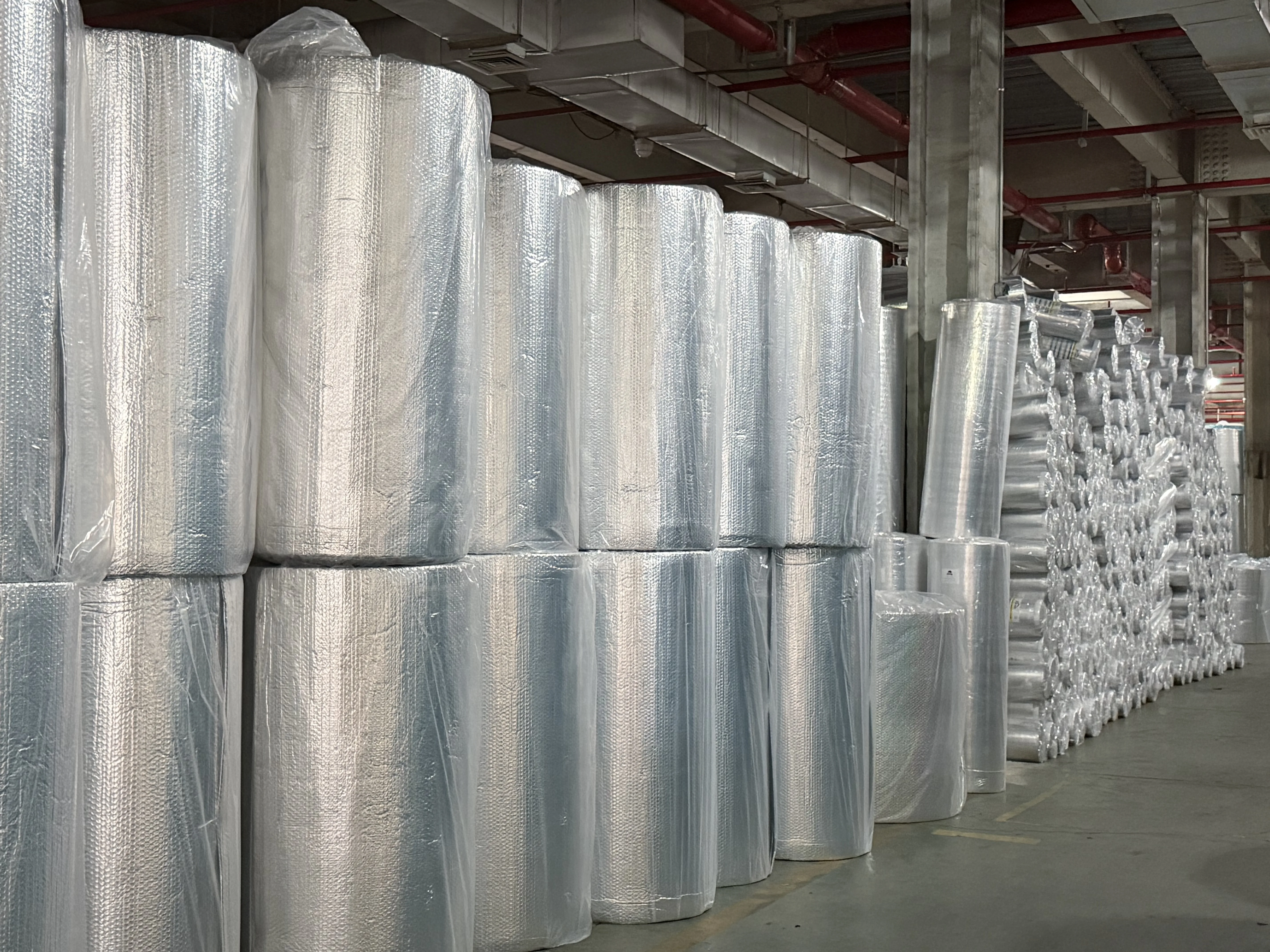
Compared with single bubble insulation, double bubble insulation incorporates two separate layers of bubbles, providing additional enclosed air spaces and a generally thicker composite structure.
This design increases the amount of enclosed air within the material. Under otherwise comparable material conditions, a double bubble structure may offer greater insulation potential and provide additional cushioning.
For steel building roofs, warehouse roofing, container linings, and certain building envelope applications, double bubble insulation can be a suitable option when a thicker composite structure is required.
In markets such as Australia and New Zealand, double bubble reflective insulation is also used in roofing applications, including roof sarking systems. However, whether a particular product is suitable for a specific roofing assembly depends on local building requirements, installation details, and verified material performance.
It is important to understand that having two bubble layers does not automatically mean better compression resistance or a longer service life. Actual performance also depends on bubble diameter, bubble height, polyethylene film thickness, lamination quality, and facing materials.
For long-term outdoor applications, buyers should also pay attention to UV resistance, weatherability, and the bonding strength between composite layers.
The right choice depends less on the product name and more on what the material needs to achieve in the intended application.
If a project prioritizes lightweight construction, flexibility, ease of processing, and cost control, single bubble insulation is often worth considering first. For basic insulation, protective packaging, or applications that do not require a thicker structure, there may be no need to pay extra for an additional bubble layer.
If a project requires a thicker composite structure, additional enclosed air space, and some cushioning capability, double bubble insulation may be a better option to evaluate. It is particularly worth considering for building envelope applications with specific thickness and structural requirements.
For material buyers and construction contractors, several factors should be checked before making a purchasing decision:
Reflective Facing Material: Confirm whether the product uses aluminum foil or metallized film. These materials differ in reflectivity, durability, and cost.
PE Film Thickness: Film thickness affects the overall structure, mechanical properties, and processing performance of the insulation material.
Bubble Diameter and Height: Different bubble dimensions affect the enclosed air spaces and overall material structure.
Overall Thickness: Do not compare products based only on the number of bubble layers. Check the actual thickness of the complete laminated structure.
Mechanical Properties: Depending on the application, consider tensile strength, tear resistance, and deformation under compression.
Thermal Performance Testing: For projects with specific insulation requirements, review thermal resistance (R-value), thermal conductivity, or test results obtained under relevant assembly conditions.
Installation Method: The installation arrangement is also important for reflective insulation. Pay particular attention to the placement of reflective surfaces in relation to adjacent air spaces, as improper installation can reduce their effectiveness.
One important point is that single bubble and double bubble products from different manufacturers may use very different material combinations, even when they have the same stated overall thickness.
Simply comparing product names or appearances is not enough to determine which material performs better. Comparing the actual structure, material specifications, and thermal test data provides a much more reliable basis for selecting the right product.
Single bubble and double bubble insulation each have their own advantages and suitable applications.
Single bubble insulation has a simpler, lighter structure and is suitable for applications where cost control and processing convenience are priorities. Double bubble insulation provides additional enclosed air spaces and is worth considering for projects requiring a thicker composite structure and specific insulation design requirements.
However, the number of bubble layers alone does not determine thermal performance. Reflective facing materials, film thickness, bubble dimensions, overall construction, and installation methods all influence the final result.
For material buyers, the best approach is not simply to choose the product with more bubble layers. Instead, consider the actual insulation requirements, material specifications, installation conditions, and purchasing budget together.
By evaluating the intended application alongside reliable product specifications and performance test data, you can select an insulation material that meets the practical requirements of your project.
