
PE coated film and PE laminated film are often discussed together because both involve polyethylene (PE) and can be used to improve the moisture resistance, durability, barrier properties, and overall functionality of a flexible material. However, they are not necessarily the same product, and the difference in manufacturing process can have a direct impact on bonding strength, thickness control, flexibility, cost, and application performance.
For B2B buyers, importers, distributors, and insulation-material contractors, understanding this distinction is important when specifying materials for reflective insulation, vapor barriers, construction membranes, packaging laminates, and other industrial applications.
PE coated film is a substrate with a layer of polyethylene applied directly to its surface. The substrate may be aluminum foil, metallized film, woven fabric, paper, or another suitable material.
In a typical extrusion coating process, polyethylene resin is melted and extruded through a flat die onto a moving substrate. The molten PE layer is then pressed against the substrate and rapidly cooled, normally with a chill roll. The PE becomes an integral functional layer on the substrate.
For example, a PE coated aluminum foil structure may be represented as:
Aluminum Foil + PE Coating
The PE layer can provide moisture resistance, protection against handling damage, improved surface properties, and additional compatibility with subsequent processing.
The thickness of the PE layer can be controlled according to the required application. Resin selection can also be adjusted depending on requirements such as flexibility, sealing performance, adhesion, and environmental resistance.
PE laminated film generally refers to a structure in which two or more pre-existing layers are bonded together, with PE film being one of the layers.
For example:
Aluminum Foil + PE Film
or:
Metallized Film + PE Film
Unlike extrusion coating, the PE layer in this structure is normally manufactured as a separate film before the lamination process. The PE film is then bonded to another substrate using an adhesive, thermal lamination, or another compatible lamination method.
In adhesive lamination, an adhesive is applied between the substrates before they are combined under pressure. Solvent-based, solventless, and other adhesive systems may be used depending on the material combination and final application.
Therefore, one of the simplest ways to understand the difference is:
PE coating adds molten PE directly onto a substrate, while PE film lamination combines an existing PE film with another substrate.
| Factor | PE Coated Film | PE Laminated Film |
|---|---|---|
| Basic process | PE is extruded directly onto the substrate | Pre-made PE film is bonded to another substrate |
| PE form during production | Molten resin | Finished PE film |
| Typical bonding method | Direct extrusion bonding | Adhesive, thermal, or other lamination |
| Structure | Substrate + PE coating | Substrate + PE film |
| Thickness flexibility | Highly adjustable through extrusion conditions | Determined largely by available PE film |
| Production integration | Coating and bonding can occur in one continuous process | Requires preparation of PE film and lamination |
| Surface functionality | PE layer can be engineered as a coating | PE film provides its own physical properties |
| Typical considerations | Resin selection, melt temperature, extrusion speed, adhesion | Film specification, adhesive system, curing, bond strength |
The distinction is particularly important because “laminated” does not automatically mean adhesive laminated. Extrusion lamination is another process in which molten PE can act as the bonding layer between two substrates. In extrusion coating, the polymer is primarily added as a coating to one substrate; in extrusion lamination, the molten polymer can function as the bonding medium between two webs.
There is no universal answer because the appropriate structure depends on the required performance and manufacturing conditions.
For reflective insulation materials, PE coated aluminum foil can be attractive when the buyer needs a continuous PE layer that protects the foil and provides moisture resistance or a suitable surface for further processing.
For example:
Aluminum Foil + PE
can be used as part of a reflective insulation or vapor-control construction where the aluminum surface provides high reflectivity while the PE layer contributes protection and moisture resistance.
A laminated structure may be preferred when the project requires a specific pre-manufactured PE film with defined thickness, mechanical properties, appearance, or other characteristics.
For more complex constructions, multiple layers can also be combined. A typical structure could include aluminum foil, PE, woven fabric, metallized film, or other functional substrates depending on the intended application.
The important point for B2B buyers is that the final structure—not simply the word “coated” or “laminated”—determines whether the material is suitable for a particular project.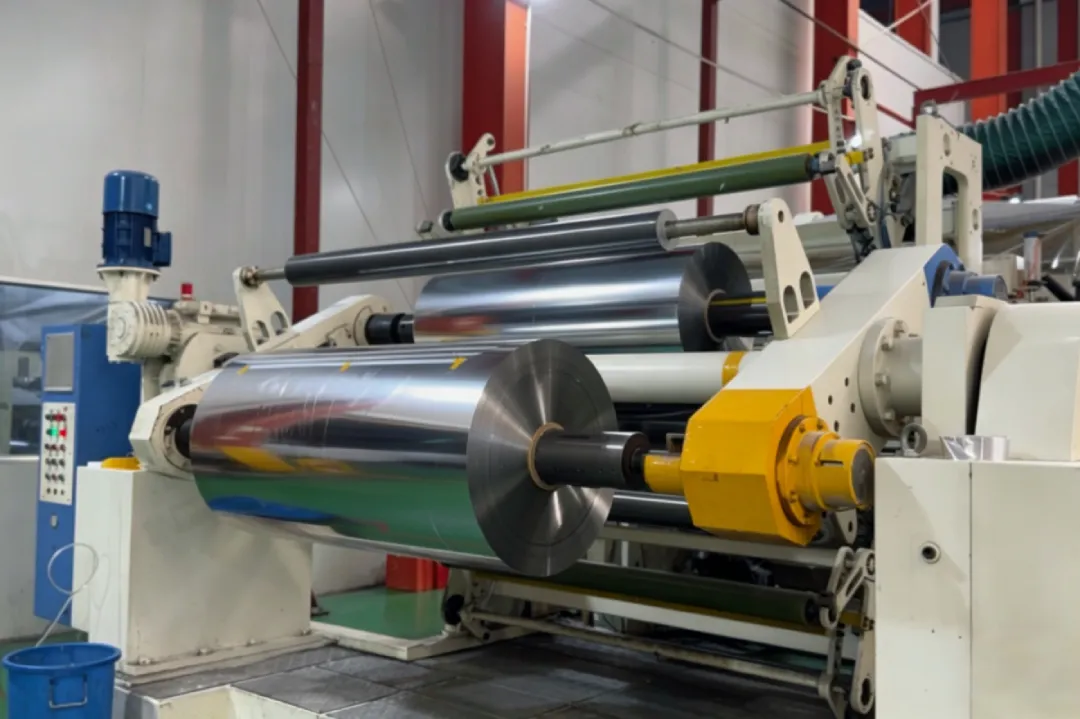
When comparing PE coated film and PE laminated film, buyers should look beyond the manufacturing name.
Bond strength is particularly important for construction and insulation materials that may experience bending, rolling, temperature changes, or long-term handling.
A supplier should be able to provide relevant bond-strength data or test results for the actual material structure rather than relying only on general statements such as “strong adhesion.”
PE thickness directly affects material weight, flexibility, moisture resistance, and cost.
A thicker PE layer is not automatically better. The correct thickness depends on the intended application, processing requirements, and required mechanical and barrier performance.
Aluminum foil, metallized film, woven fabric, paper, and plastic films have different surface characteristics.
Surface treatment, primer selection, resin compatibility, and processing conditions can all influence adhesion. For extrusion coating, substrate surface preparation and process control are particularly important because the molten polymer must develop adequate adhesion during the coating process.
Extrusion coating introduces a hot polymer melt to the substrate. Therefore, the thermal stability of the substrate must be considered.
This can become especially important when working with metallized films or heat-sensitive polymer substrates. Industry technical literature notes that thermal exposure during extrusion coating can affect certain metallized structures through differential expansion or surface defects.
For insulation and building-material applications, buyers should evaluate moisture resistance and vapor-control performance based on the complete construction rather than assuming that the presence of PE automatically provides a specific vapor-barrier rating.
The substrate, PE thickness, seams, joints, punctures, and installation method can all influence actual field performance.
One of the most common mistakes is specifying only “PE laminated film” or “PE coated film” without defining the complete construction.
A professional B2B specification should normally identify:
Substrate material
PE type
PE thickness or coating weight
Total thickness
Width and roll length
Bond strength requirements
Surface treatment requirements
Appearance requirements
Intended application
Required test standards
Packaging and shipment requirements
For example, instead of requesting simply “PE coated aluminum foil,” a buyer may specify:
Aluminum foil + PE coating, specified PE thickness, specified foil thickness, required width, roll length, adhesion requirement, and intended insulation application.
This gives the manufacturer enough information to recommend an appropriate production structure.
For buyers of industrial insulation and building materials, the decision should begin with the required end-use performance.
Choose a PE coated structure when the project requires a directly applied PE layer, integrated continuous production, controlled coating thickness, or a functional polymer surface added directly to the substrate.
Consider a PE laminated structure when the application specifically requires a pre-made PE film with defined physical properties, or when combining multiple finished substrates provides the desired construction.
For high-volume production, extrusion coating can also provide manufacturing advantages because the polymer layer is formed directly from resin rather than requiring a separately manufactured film. However, process economics depend on production volume, substrate compatibility, equipment configuration, scrap rates, and product specifications. Industry comparisons emphasize that neither extrusion coating nor adhesive lamination is universally superior; the appropriate process depends on the final construction and manufacturing requirements.
The difference between PE coated film and PE laminated film is primarily related to how the PE layer becomes part of the final structure.
PE coated film is produced by applying molten polyethylene directly onto a substrate, while PE laminated film generally combines a pre-made PE film with another substrate through an appropriate lamination process.
For B2B applications, the distinction matters because the production method can influence adhesion, thickness, flexibility, thermal exposure, manufacturing efficiency, and final material performance.
When purchasing materials for reflective insulation, vapor barriers, construction membranes, packaging, or industrial applications, buyers should therefore specify the complete material structure and required performance, rather than selecting a product based solely on the terms “coated” or “laminated.”
A qualified manufacturer should be able to discuss substrate selection, PE resin, coating or film thickness, bonding method, roll specifications, and application requirements before finalizing the material specification.
