XPE Foam Insulation is a stable closed-cell foam insulation material widely used in building insulation, packaging protection, and industrial thermal insulation. With excellent thermal resistance, moisture resistance, and cushioning performance, it maintains reliable performance in a wide range of demanding environments.
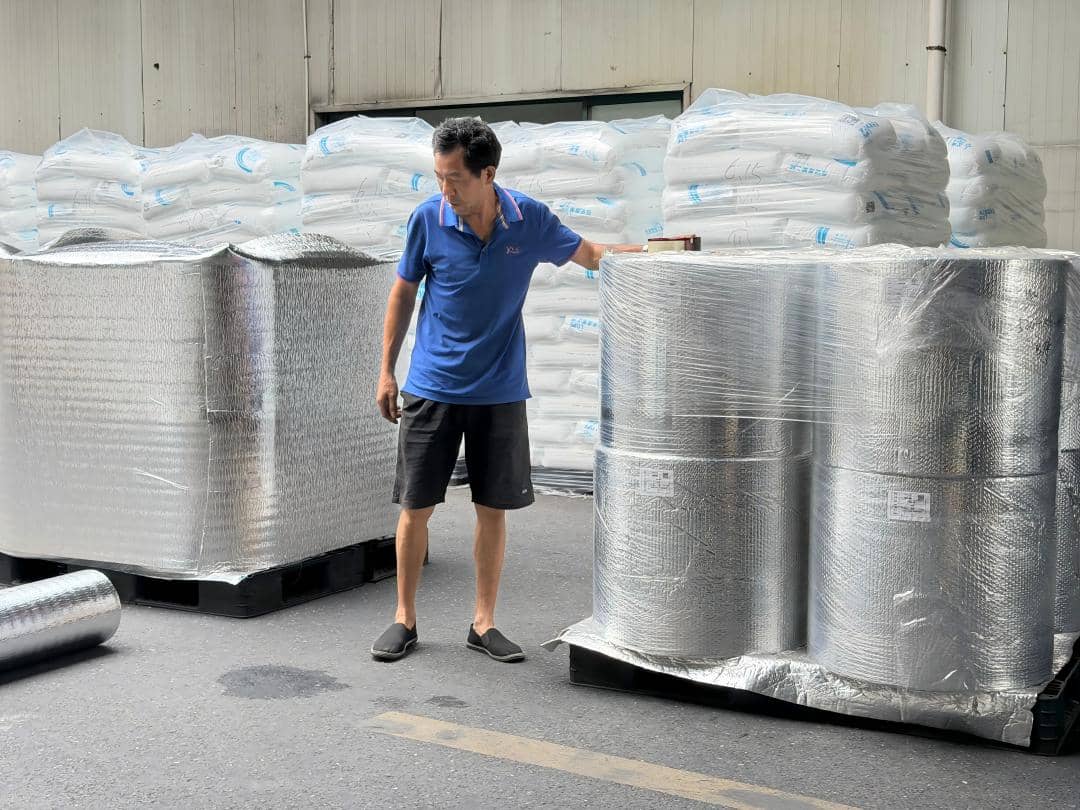
XPE stands for Chemically Cross-linked Polyethylene Foam. It is manufactured by blending polyethylene (PE) as the primary raw material with foaming agents and other fillers, followed by continuous high-temperature foaming. XPE Foam Insulation is a multi-layer composite material created by laminating the XPE foam substrate with other functional surface materials—such as aluminum foil, PE film, PET film, or non-woven fabrics—using hot-melt or adhesive processes.
Compared with traditional materials, XPE Foam Insulation offers better dimensional stability and does not easily deform. It also provides excellent cushioning performance, effectively absorbing impact and protecting inner contents.
Core Advantages of XPE Foam Insulation
1. Independent Closed-Cell Structure: Perfect Water & Moisture Barrier
XPE features a uniform independent closed-cell structure. This means water molecules and moisture cannot penetrate it, resulting in extremely low water absorption. When used as a moisture-proof underlayment or construction waterproofing layer, it effectively blocks ground dampness and protects the upper structures.
2. Superior Thermal Insulation: The Hot & Cold Barrier
XPE has an extremely low thermal conductivity. When laminated with aluminum foil, it can reflect more than 95% of radiant heat. This dual combination of "foam thermal resistance + aluminum foil reflection" makes it an excellent choice for underfloor heating mats, automotive sunshades, and cold chain logistics.
3. Exceptional Cushioning and Resilience
Compared to traditional EPE (Expanded Polyethylene), XPE undergoes cross-linking modification, resulting in a more stable network molecular structure. After enduring long-term heavy pressure or high-frequency impacts, it still quickly recovers its original shape without collapsing easily, making it highly favored in automotive interiors and premium packaging.
4. Eco-Friendly & Green: Non-Toxic and Odorless
With increasingly strict environmental regulations today, XPE Foam Insulation does not produce any toxic or harmful gases during production or use. It complies with international environmental standards such as EU RoHS, making it widely used in skin-friendly products like children's crawling mats and yoga mats.
5. Easy Processability & Chemical Resistance
It is resistant to acids, alkalis, oils, and aging, and is easy to cut, die-cut, and thermoform, which greatly reduces processing difficulty and waste rates for downstream manufacturing enterprises.
Key Application Scenarios: Where Does It Work?
XPE Foam Insulation is widely used across multiple industries due to its stable structure and multifunctional performance.
In the building energy-saving sector, it is commonly used as a reflective insulation layer in underfloor heating systems, improving indoor thermal efficiency. It is also applied in wall and roof structures to reduce energy loss.
In packaging applications, XPE Foam Insulation is used for protecting electronic products, precision instruments, and fragile goods, providing excellent cushioning and impact resistance.
In addition, it plays an important role in automotive interiors, cold-chain logistics, and industrial insulation, meeting various thermal protection requirements in different environments.

