Aluminum foil composite film is often described as a high-barrier material, but its performance does not come from the foil layer alone. It is the result of how multiple materials are combined and controlled through structure and processing. In real applications, its value is defined less by a single peak property and more by the balance achieved between different layers under practical conditions.
Aluminum foil composite film is often introduced in packaging materials as a high-barrier solution, but in practice it is less a “single material” and more a carefully balanced structural system. What looks like a simple metallic layer sandwiched between plastics is actually the result of multiple engineering decisions—each layer contributes something different, and the final performance depends on how well these layers interact rather than any single component.
At the core of its structure is aluminum foil, which is responsible for the material’s well-known barrier properties. It effectively blocks oxygen, moisture, and light, making it suitable for products that are sensitive to oxidation or humidity. However, aluminum foil on its own is mechanically fragile. It tears easily under stress, has poor fold endurance, and is not suitable for direct forming or high-speed converting processes. This is where the concept of composite design becomes essential.
In industrial production, aluminum foil is usually bonded with polymer films such as PET, BOPP, or PE, and sometimes combined with paper or functional coatings depending on the application. The selection is not arbitrary. PET, for example, contributes dimensional stability and heat resistance, while PE is mainly used for heat sealing. The adhesive layer between them is often overlooked, but it plays a critical role in determining peel strength, thermal resistance, and long-term durability. Even small variations in adhesive formulation or coating thickness can lead to noticeable differences in performance during lamination or end-use packaging.
What becomes particularly interesting is how these layers behave under stress. A well-designed aluminum foil composite film does not fail in a single obvious way; instead, weaknesses often appear gradually—micro-cracks in the foil layer, delamination at the interface, or loss of sealing integrity under repeated thermal cycling. These failure modes are not always visible in laboratory testing, which is why practical production experience often matters as much as measured data.
From an application perspective, aluminum foil composite films are used in far more contexts than basic food packaging. In dry food products such as coffee, powdered milk, or snack foods, the material is chosen primarily for its ability to extend shelf life by minimizing oxygen ingress. In pharmaceutical packaging, especially blister packs and pouches, the requirements are more strict, often demanding stable barrier performance under humidity and temperature fluctuations. In industrial and construction-related applications, similar structures are used for insulation layers or protective wrapping where moisture control is critical.
However, performance is never evaluated through a single metric. Engineers typically look at a combination of oxygen transmission rate (OTR), water vapor transmission rate (WVTR), heat seal strength, and puncture resistance. These properties are interdependent. Increasing aluminum thickness may improve barrier performance, but it can also reduce flexibility and processing efficiency. Likewise, optimizing heat-seal layers may compromise stiffness or dimensional stability. In real-world design, the material is always a compromise rather than an absolute optimization.
In recent years, environmental considerations have started to influence how aluminum foil composite films are designed. Multi-layer structures that are difficult to separate pose challenges for recycling systems, pushing manufacturers to explore simplified structures or more recyclable bonding systems. Still, in high-barrier applications, aluminum foil remains difficult to replace because very few alternative materials can match its performance in such a thin layer.
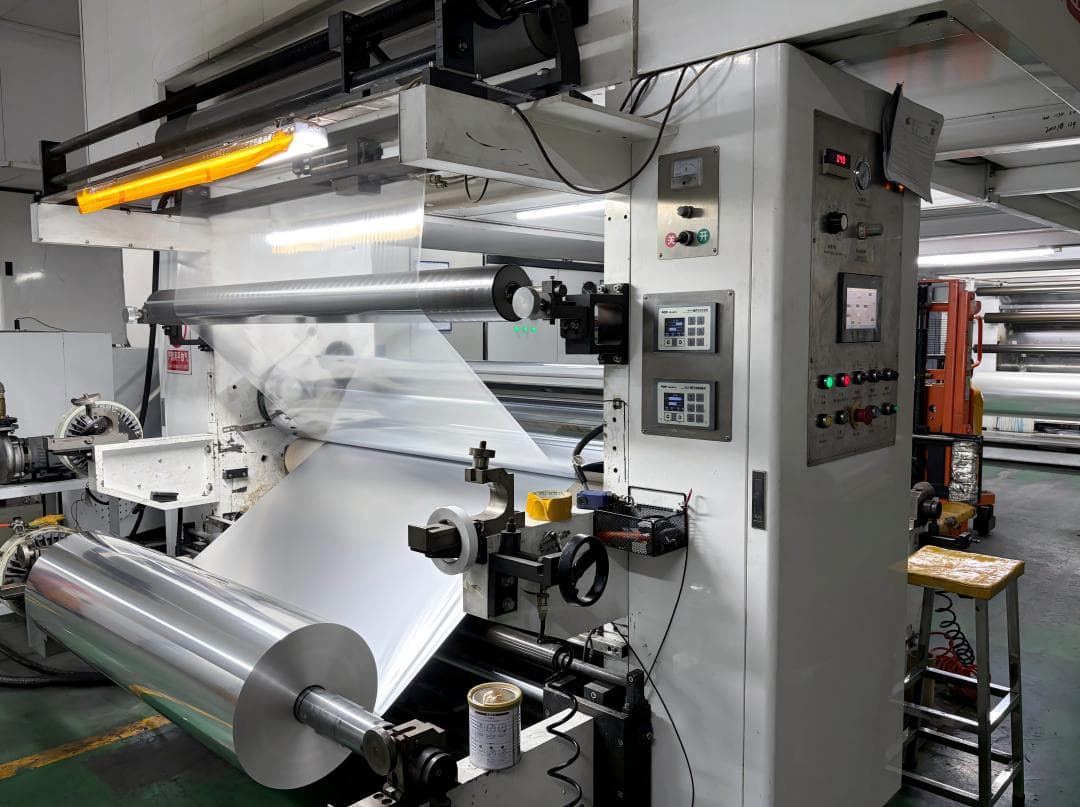
Processing behavior is another practical limitation that is often underestimated. During converting operations such as slitting, lamination, or bag making, tension control becomes critical. Even slight instability can lead to edge cracking, wrinkling, or hidden foil fractures that only become apparent after packaging. Similarly, heat sealing requires a relatively narrow and well-controlled temperature window; deviations can result in weak seals or material deformation.
Looking at it from a broader materials engineering perspective, aluminum foil composite film represents a layered approach to problem-solving: metal for barrier protection, polymers for flexibility and processability, and adhesives for structural integration. It is not a material that evolved from a single breakthrough, but rather from incremental improvements in how different materials are combined and stabilized.
Because of this, there is rarely a universal “best structure.” The same configuration may perform differently depending on machinery, product type, storage conditions, and even production speed. This variability is one of the reasons why aluminum foil composite films continue to require iterative optimization in industrial use, despite being a mature material system.
In the long term, development is likely to focus on thinner structures, improved bonding stability, and better recyclability. Yet even as new materials emerge, aluminum foil composite film remains difficult to fully replace in high-barrier packaging. Its continued relevance is not based on novelty, but on a long-established balance of performance, reliability, and manufacturing practicality.

