Compare aluminum foil vs metallized film insulation. Learn their differences in structure, performance, applications, and how to choose the right material.
In roofing systems, cold chain packaging, pipe insulation, poultry house insulation, and container protection projects, reflective insulation materials have become a common choice. Aluminum foil and metallized film are two widely used reflective materials. Although they look similar on the surface, their manufacturing processes and material structures are significantly different.
Many buyers tend to refer to both materials simply as "aluminum film" when requesting quotations, or compare them directly based on price per square meter. However, problems may arise after delivery or during actual use when the material's barrier properties, mechanical strength, or weather resistance fail to meet project requirements. This can lead to additional maintenance expenses and replacement costs.
Although both materials feature a metallic reflective surface, aluminum foil and metallized film differ in their manufacturing processes, metal layer structures, lamination methods, and performance characteristics.
For B2B buyers, material selection should not be based solely on whether the surface looks silver. It is more important to understand how the metal layer is formed, what substrate is used, and whether the finished laminated product can meet the specific requirements of the project.
Aluminum Foil Insulation: A Continuous Metal Layer for Reliable Barrier Protection and Structural Stability
Aluminum foil insulation is typically manufactured through a rolling process. Aluminum is passed through multiple rolling stages to produce a continuous, dense metal layer. Depending on the intended application, the foil can then be laminated with PE film, woven fabric, bubble film, EPE foam, and other materials to create different reflective insulation structures.
The actual foil thickness is determined by the product structure and application requirements. Different specifications of aluminum foil laminated materials can vary in barrier performance, flexibility, and overall cost.
Key Characteristics of Aluminum Foil Insulation
1. Strong Moisture Vapor and Gas Barrier Properties
The continuous and dense aluminum layer provides an effective barrier against water vapor, oxygen, and other gases.
When the laminated structure remains intact and is free from significant pinholes or physical damage, aluminum foil materials generally offer excellent barrier performance. This makes them suitable for packaging and insulation applications where moisture protection, oxidation resistance, and sealing performance are important.
2. Stable Low-Emissivity Surface
A clean and smooth aluminum foil surface has low infrared emissivity, helping reduce radiant heat transfer.
When installed with an appropriate air gap, aluminum foil can provide effective radiant heat reflection. For Radiant Barrier applications, buyers should pay particular attention to the actual measured surface emissivity rather than assuming performance based solely on the material name.
3. Good Metal Layer Integrity
Aluminum foil features a continuous metallic structure that provides a relatively stable barrier layer under normal service conditions.
However, repeated folding, excessive stretching, puncturing, or improper installation may cause microcracks or pinholes, potentially reducing the overall barrier performance.
4. Environmental Corrosion and Lamination Structure Considerations
Aluminum foil generally offers good stability under normal environmental conditions. However, prolonged exposure to high humidity, salt spray, or acidic and alkaline environments may still cause corrosion, particularly when protective layers are damaged or the metal surface remains in contact with corrosive substances.
For projects in coastal areas, livestock buildings, and other demanding environments, buyers should select suitable protective layers and laminated structures based on actual operating conditions.
Aluminum foil insulation also has certain limitations. Compared with ordinary polymer films, solid aluminum layers are more susceptible to creasing and mechanical damage under repeated bending. Depending on the product structure, weight and material costs may also be relatively higher.
In addition, the cost of aluminum foil raw materials is affected by fluctuations in aluminum prices. The overall product cost should therefore be evaluated based on foil thickness, number of laminated layers, and manufacturing processes.
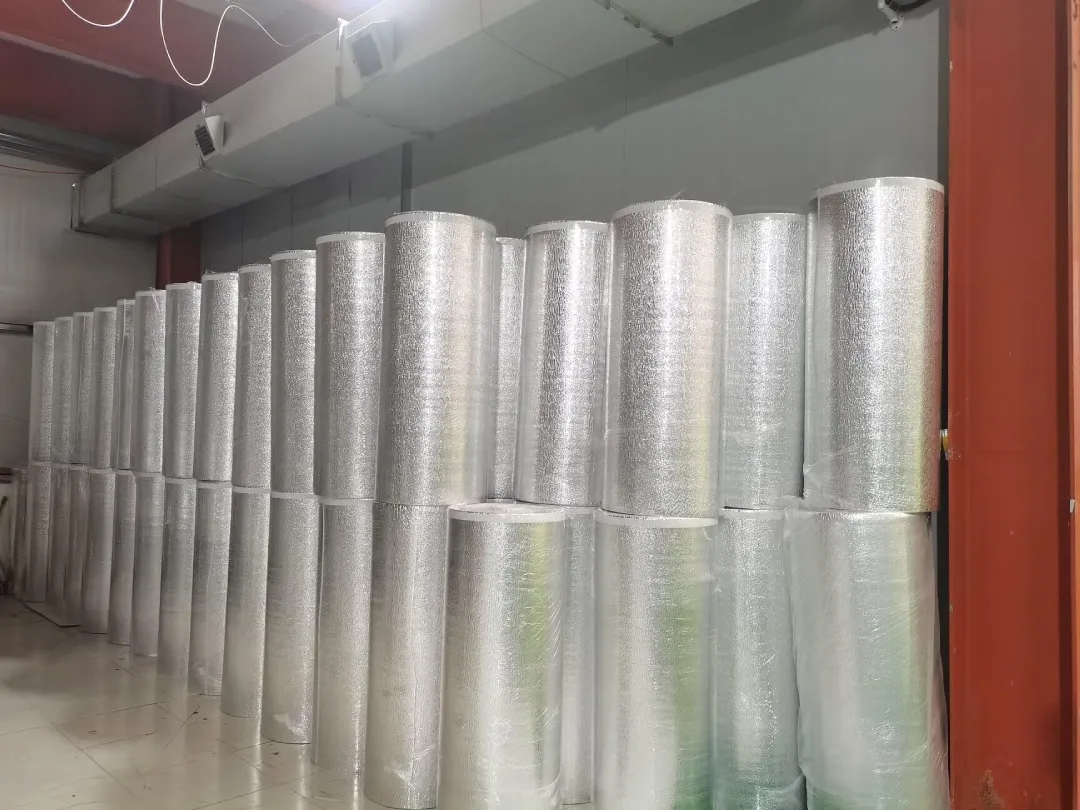
Metallized Film Insulation: An Ultra-Thin Metal Coating for Lightweight and Cost-Effective Applications
Metallized film is not produced by laminating a layer of aluminum foil onto a plastic film. Instead, it is manufactured through a vacuum metallization process, in which an extremely thin layer of metallic aluminum is deposited onto the surface of polymer films such as PET or BOPP.
During production, aluminum is heated and vaporized in a vacuum environment. The aluminum vapor then condenses onto the film surface, forming a thin metallic coating.
The coating thickness is generally measured in angstroms (Å), typically at the nanometer scale. For example, specifications may range from 350–380 Å, depending on the metallization process and product requirements.
From a material structure perspective, the primary substrate remains a plastic film, while the silver-colored metallic coating provides reflective properties and a certain level of barrier protection.
This is the fundamental difference between metallized film and solid aluminum foil.
Key Characteristics of Metallized Film Insulation
1. Lightweight and Easy to Install Over Large AreasBecause the aluminum coating is extremely thin, the overall product weight mainly depends on the PET, BOPP, or other film substrates, as well as the additional laminated layers.
Compared with similar aluminum foil laminated structures, some metallized film products offer lower weight, good flexibility, and easier cutting and installation.
These characteristics make them suitable for large-area roofing applications, temporary insulation projects, and lightweight packaging solutions.
2. Good Radiant Heat Reflective PerformanceMetallized film also features a metallic surface with low infrared emissivity, helping reduce radiant heat transfer.
Its actual performance depends on the quality of the deposited aluminum layer, surface condition, and overall laminated structure.
Some high-quality metallized films can also achieve low surface emissivity. Therefore, it is not accurate to assume that metallized film always provides significantly lower radiant insulation performance than aluminum foil.
3. Flexible Processing and Versatile Lamination OptionsMetallized film can be laminated with bubble film, PE film, woven fabric, and other functional materials to produce reflective insulation products with different thicknesses, structures, and performance characteristics.
By adjusting the film substrate, metallization process, and number of laminated layers, manufacturers can develop products that meet different project requirements for weight, flexibility, and cost.
4. Suitable for Cost-Conscious ProjectsSince the amount of metallic aluminum used is relatively small, metallized film generally offers an advantage in raw material costs.
For large-area installations, projects with strict weight requirements, or applications with limited budgets, metallized film can be a cost-effective alternative.
For B2B buyers, besides understanding the manufacturing process, it is essential to master practical inspection and selection methods. First, a simple identification test: take a sample and fold and rub it repeatedly. Vacuum‑metallized film tends to shed silver powder, while aluminum foil only develops cracks without powder flaking off. Second, review test reports, focusing on four key metrics: aluminum layer thickness, water vapor transmission rate, accelerated aging resistance, and flame retardancy. These are core benchmarks for quotation comparison; do not judge solely by the price per square meter. Third, select according to application scenarios: aluminum foil composite insulation materials are preferred for long‑term outdoor exposure, coastal salt‑fog environments, premium cold chain applications, and projects with strict fire safety requirements. Vacuum‑metallized film offers a more cost‑effective solution for short‑term insulation, large‑area roof sarking, agricultural sheds, and standard projects with budget constraints.
Although aluminum foil and metallized film look similar, they have different technical characteristics, from the way their metal layers are formed to the performance of their finished laminated structures.
Aluminum foil uses a continuous solid metal layer, offering advantages in moisture barrier performance and metal layer integrity. Metallized film, on the other hand, uses an ultra-thin deposited aluminum coating, providing advantages in lightweight construction, processing flexibility, and material cost.
For B2B buyers, the real question is not which material is universally better, but which one is more suitable for the project's operating environment, performance requirements, and budget.
Whether selecting aluminum foil or metallized film, buyers should evaluate the metal layer structure, laminated substrate, surface emissivity, barrier properties, and long-term durability.
Clearly defining material specifications, reviewing relevant test reports, and including technical requirements in purchasing contracts can help minimize material selection errors and reduce potential procurement risks.

