Aluminum foil woven fabric is a composite insulation material combining reflective aluminum foil and durable woven structure. It offers heat reflection, moisture resistance, and tear strength, widely used in construction, logistics, and industrial protection, with performance depending on material quality and manufacturing process.
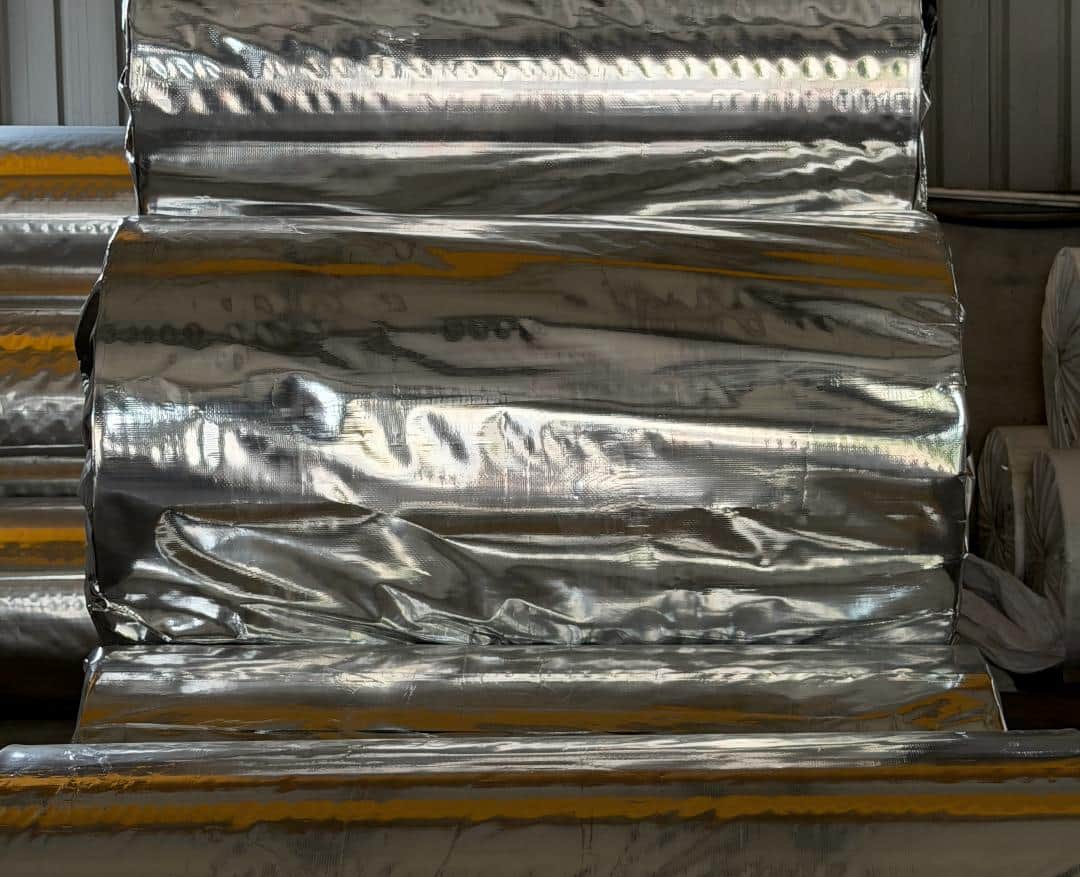
In industrial plants, warehouses, large factory rooftops, and even offshore container yards, one can often spot a type of roll material with a distinct silver sheen and tightly structured surface—
aluminum foil woven fabric. At first glance, it appears simple, but its applications go far beyond basic covering. Compared with pure aluminum foil, which is prone to cracking, and conventional woven fabrics that lack thermal insulation and moisture resistance, this composite material effectively compensates for the shortcomings of both. As a result, it has become a widely used foundational material in building energy efficiency, industrial storage, and cold-chain protection.
In practice, product performance varies significantly across the market. Differences in weaving density, aluminum purity, and lamination processes all directly affect service life and protective performance. Companies specializing in functional composite film materials, such as Zhejiang Pengyuan New Material Co., Ltd., tend to differentiate themselves through consistency in structural stability and application adaptability.
When people first see aluminum foil woven fabric, they usually notice its metallic surface. However, the real performance comes from its layered structure. Mainstream products typically consist of three layers: a high-purity aluminum foil layer, a PE heat-sealing lamination layer, and a high-density PE woven base fabric. For higher-demand applications, a double-sided aluminum foil sandwich structure is often used, enabling both sides to provide reflective insulation and moisture resistance.
The aluminum foil layer is generally made from high-purity aluminum (above 99.5%), with infrared reflectivity reaching around 94%–96%. In summer rooftop applications, it significantly reduces heat transfer into indoor spaces and lowers air-conditioning energy consumption. At the same time, the dense aluminum layer provides an effective barrier against water vapor and oxygen, offering more stable protection for sensitive goods such as electronic components and precision machinery in marine transport or high-humidity environments.
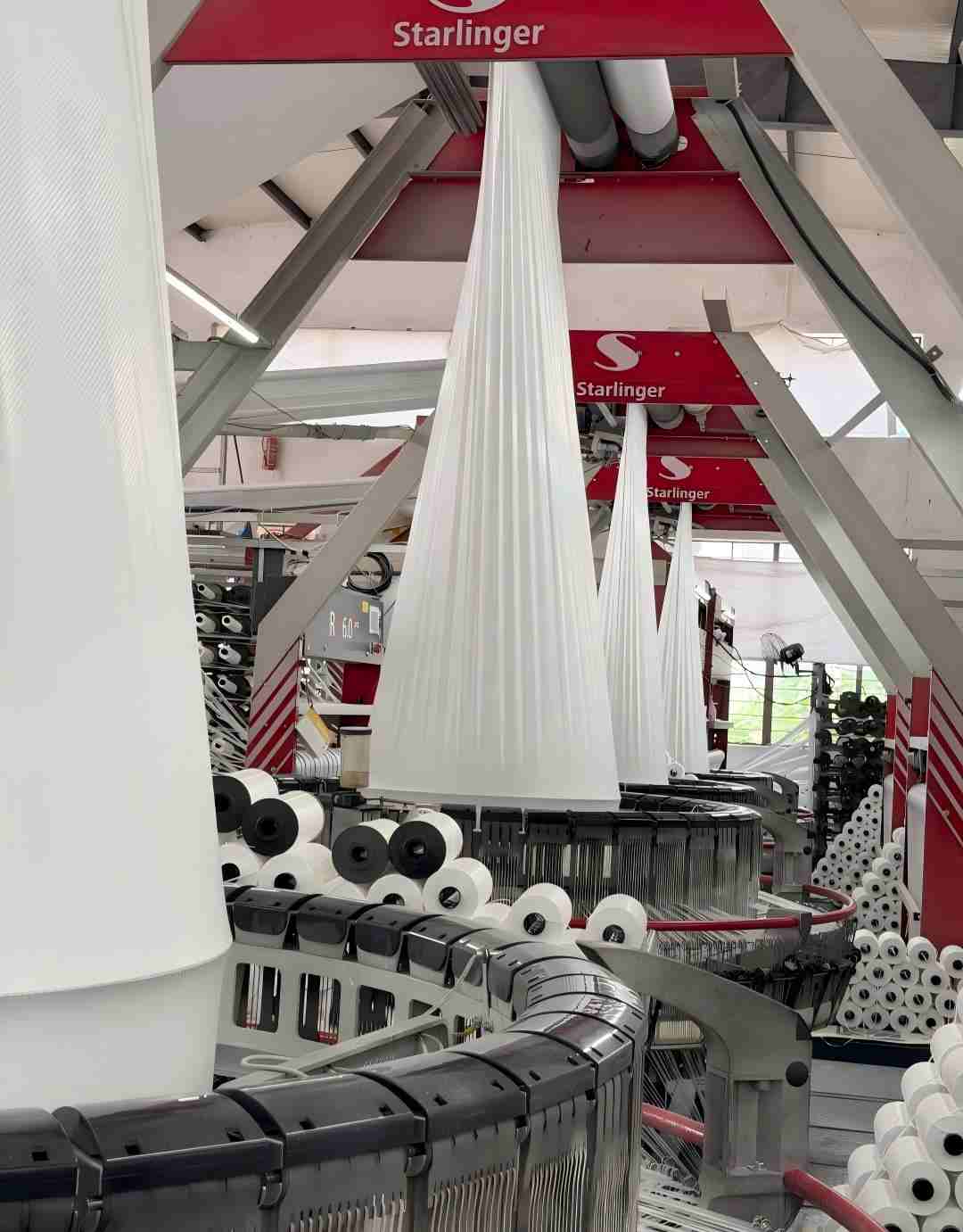
If aluminum foil defines the “upper limit of function,” then the woven base fabric determines durability. Pure aluminum foil is extremely thin and easily damaged by stretching or abrasion. Once ruptured, its thermal and barrier performance quickly deteriorates. Pengyuan adopts a customized flat-yarn weaving process, which improves longitudinal tensile strength by approximately 15% compared with standard uneven or unstable weft structures.
In outdoor storage, construction covering, or pipeline wrapping, this structure offers better tear resistance and wear durability. Even under long-term wind exposure, friction, or compression, structural damage is less likely. At the same time, the material maintains flexibility, allowing easy cutting, folding, and splicing. This improves installation efficiency in large-area roofing or long-distance pipeline insulation without requiring complex reinforcement accessories.
In the field of building energy efficiency, aluminum foil woven fabric is already widely applied and represents one of the clearest demonstrations of material performance differences. Many green factories and prefabricated buildings now use reflective insulation layers in roofs or ceilings. However, feedback from real projects shows that low-cost materials often suffer from foil detachment or powdering within one year, leading to a significant decline in insulation performance and higher maintenance costs.
To address this, Pengyuan has optimized its materials specifically for building environments, ensuring structural stability under long-term UV exposure. Single-sided foil structures are typically used for roof lining to reflect solar radiation and reduce indoor temperature rise. Double-sided foil sandwich structures are more commonly used in underfloor heating reflection layers or basement wall moisture barriers, preventing damp penetration while protecting insulation layers from failure due to moisture absorption.
In industrial logistics and storage scenarios, the function becomes even more direct. For transporting large machinery, photovoltaic modules, precision motors, or complete equipment sets, container environments often experience large temperature fluctuations and humidity changes. Conventional tarpaulins mainly provide dust protection but offer limited anti-corrosion or moisture resistance.
Thickened aluminum foil woven fabric is used here as a full wrapping material. When combined with vacuum packaging, it effectively blocks moisture and salt intrusion, while the outer woven layer resists abrasion and impact during loading and unloading. In cold-chain transport applications, flame-retardant modified versions can also be integrated into insulated vehicle linings, helping stabilize internal temperature while meeting transport safety requirements.
Other applications include agricultural greenhouse thermal curtains, outdoor equipment long-term covering, and emergency shelter inner linings. Different thicknesses and specifications can be customized according to requirements.
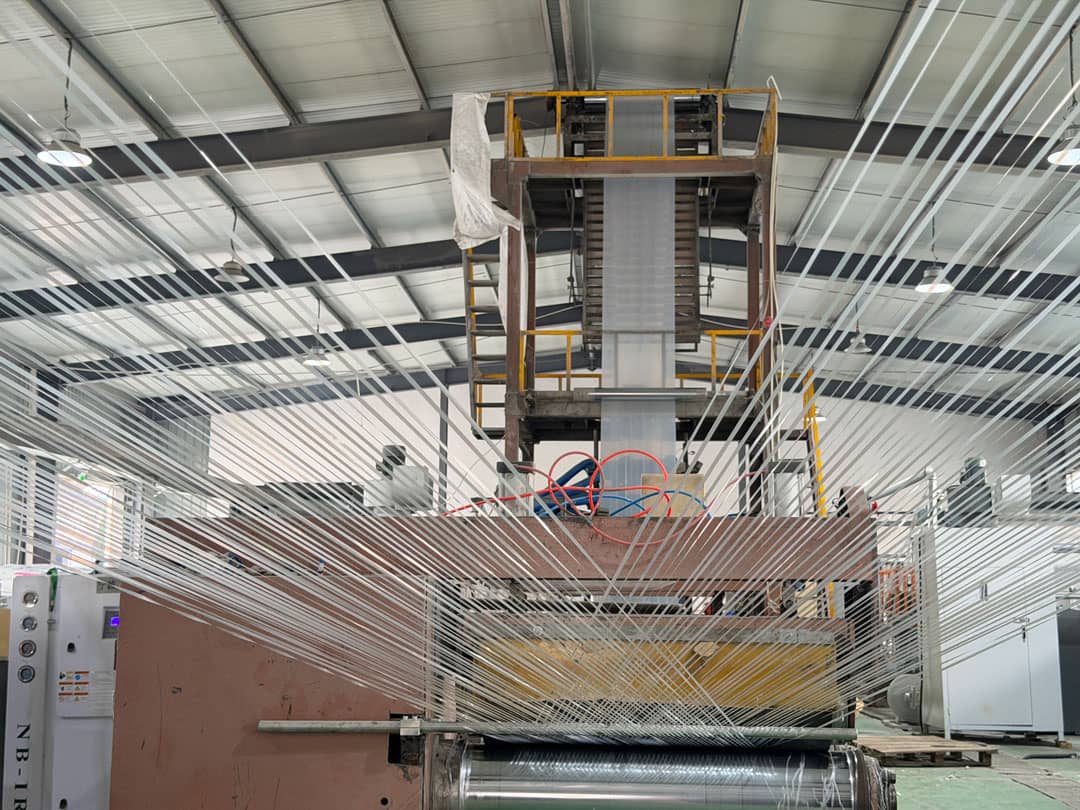
The ability to support these diverse applications relies on a complete production system. Zhejiang Pengyuan New Material Co., Ltd. operates not merely as a composite processor sourcing external materials, but as a vertically integrated manufacturer covering flat yarn weaving, aluminum foil treatment, and thermal lamination in-house.
The full process includes raw material extrusion, aluminum foil passivation, multilayer lamination, and final slitting. Each batch undergoes testing for tensile strength, water vapor transmission rate, peel strength, and reflectivity, supported by CNAS-standard laboratory data. For export orders, complete material test reports can be provided to meet various regional environmental and import compliance requirements.
In addition, product development is segmented according to application scenarios, including flame-retardant aluminum foil woven fabric, glass fiber reinforced high-temperature versions, and anti-static materials for electronic packaging. These are designed for specialized environments such as high-temperature pipelines, electronic components, and chemical materials.
From a procurement perspective, aluminum foil woven fabric is not a low-cost, fast-consumption material. It is a long-term functional material, where apparent price differences often translate into maintenance, replacement, or performance loss over time. Its value is not defined by a single feature such as shading or waterproofing, but by the sustained stability of insulation, moisture resistance, tear strength, and weather durability.
Therefore, in material selection, process control stability and structural design are often more critical than short-term pricing. With the global rise in energy efficiency upgrades and cross-border industrial logistics demand, the application scope of such durable functional composite materials will continue to expand. Ultimately, controllable manufacturing processes remain the core factor determining long-term material value.

